
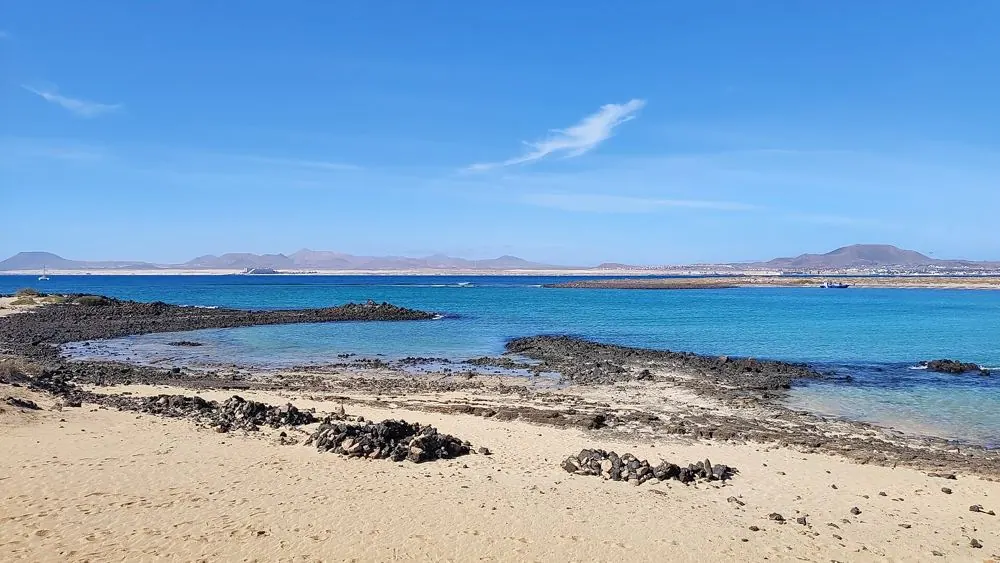
The swimming warning, first
The beach faces the open Atlantic on the north-west side of the island, and the water accelerates through the channel between La Graciosa and the islets of Montaña Clara and Alegranza. The result is a strong, unpredictable pull very close to shore. The red flag flies here often, there is no lifeguard, and the standard local advice is not to go deeper than your hips.
Getting there
It is about 5.2 km from Caleta de Sebo, a flat, dry track with no shade: 60 to 75 minutes on foot each way. By bike it is roughly half an hour, except for the final sandy section where most people push. The 4x4 tours stop here as part of the island circuit, which is how most visitors with a return ferry to catch actually see it.
Work backwards from your boat. On a six-hour day, walking there and back leaves you about two hours on the sand, and nothing else on the island.
What is not there
No bar, no toilets, no drinking water, no shade and no lifeguard. Whatever you want for the afternoon, you carry from the village. The wind that makes swimming risky also drives sand: a windbreak or a sheltered spot behind the dunes changes the experience completely.
Pack as you would for a day on Lobos: water, sun protection, something to sit on and everything you brought back out with you.
Where to swim instead
Playa Francesa, about 2 km from the village on the sheltered south-west side, is the calm-water alternative and the one families use. Playa de la Cocina, tucked under Montaña Amarilla roughly 4 km away, is small, protected and the prettiest place to actually get in the water. Both are on the lee side of the island, out of the north swell that hits Las Conchas.
If swimming is the point of your day, plan for those two and treat Las Conchas as the view you walk to. Check the ferry times and the distances and transport options before you commit to the long walk.
Sources checked
Visit La Graciosa: distances between the village and the beaches
GetYourGuide: activities in Caleta de Sebo